
The Complete Online Drums Studio: Drum Kits, Sequencers & Rhythm Training
Welcome to the ultimate web-native studio for online drums and rhythmic percussion. Built for drummers, beatmakers, educators, and beginner students, our platform provides a responsive 5-piece acoustic drum set alongside a 16-step online drum machine. Powered by Web Audio API synthesis, you can practice limb coordination, record drum patterns, and explore rhythm theory directly in your web browser with zero latency.
Acoustic Drum Sets, Electric Kits & Percussion Physics
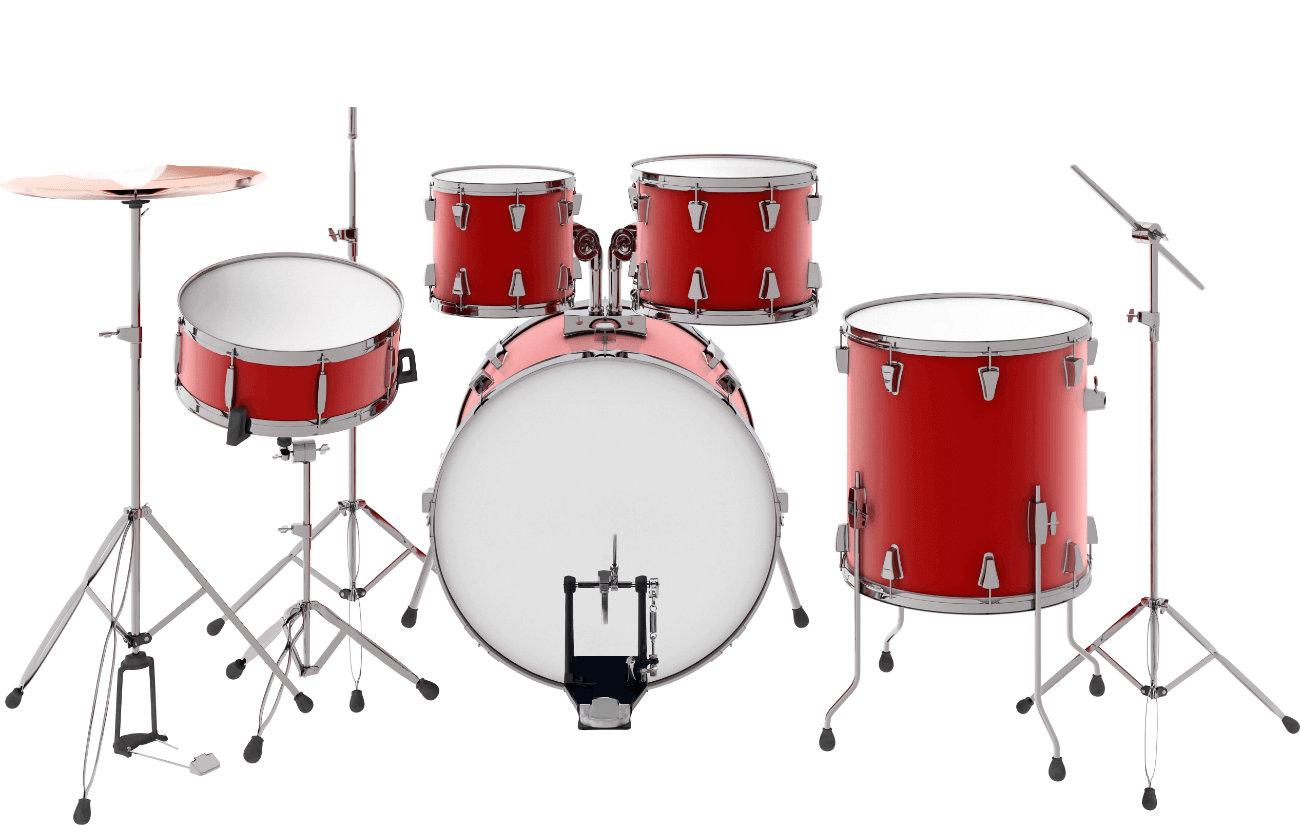
Understanding percussion mechanics is essential for any student exploring an online drum set or traditional hardware. A classic acoustic drum set uses wooden shells and tensioned drumheads to produce sound. For example, striking a metallic red drum with coated heads creates rich acoustic resonance. Key components include the kick bass drum, high/mid/floor toms, cymbals, and the central snare drum, which utilizes metal snare wires for a sharp crack.
In modern studios, an electric drum set uses rubber or mesh pads connected to a sound module, making quiet home practice convenient. Novelty percussion like a steel tongue panda drum or acoustic world instruments also highlight how striking surfaces generates distinct harmonic overtone patterns.
Digital Drum Lessons, Classes & Skill Development
Developing rock-solid timing requires structured guidance. Taking online drum lessons allows students to learn stick grips, rudiments, and limb independence at their own pace. Beginners exploring an online drum course or enrolling in structured online drum classes benefit from practicing along with visual metronomes and interactive audio.
Whether you are searching for online drum lessons for beginners, evaluating online drum lessons for adults seeking a hobby, or introducing young musicians to online drum lessons for kids, engaging with a free browser kit makes practice fun. Pairing free online drum lessons with the best online drum lessons for beginners accelerates groove retention. Finding the best online drum lessons ensures a smooth transition from basic quarter-note beats to complex polyrhythms.
Online Drum Machine Sequencers & Digital Pads
In electronic music production, a free online drum machine or interactive online drum pad enables producers to program beat patterns instantly. Using an online drum machine free utility lets you trigger 16-step grid sequences for hip-hop, house, and synthwave beats.
Practicing on virtual online drums provides an accessible alternative when acoustic kits are unavailable. You can test custom sounds on an online drum kit, refine acoustic tension using an online drum tuner, or trigger individual samples on an online drum interface. Even simple drum lessons emphasize practicing with a steady metronome pulse to build accurate internal muscle memory.
Hearing Protection, Acoustic Physics & Terminology
Because acoustic drums generate sound pressure levels exceeding 100 dB, protecting your delicate human ear drum (tympanic membrane) with high-fidelity earplugs is crucial for long-term hearing health during live rehearsals.
Interestingly, the word drum appears across nature and culture — from aquatic species like the Sciaenidae family (commonly known as a croaker or drum fish) that produce drumming sounds with their swim bladders, to historic marching snare cadences. Regardless of whether you play a full drum kit or practice finger-tapping in the browser, mastering rhythm unlocks deeper musical expression across every genre.